
11.04.2017 Showcase
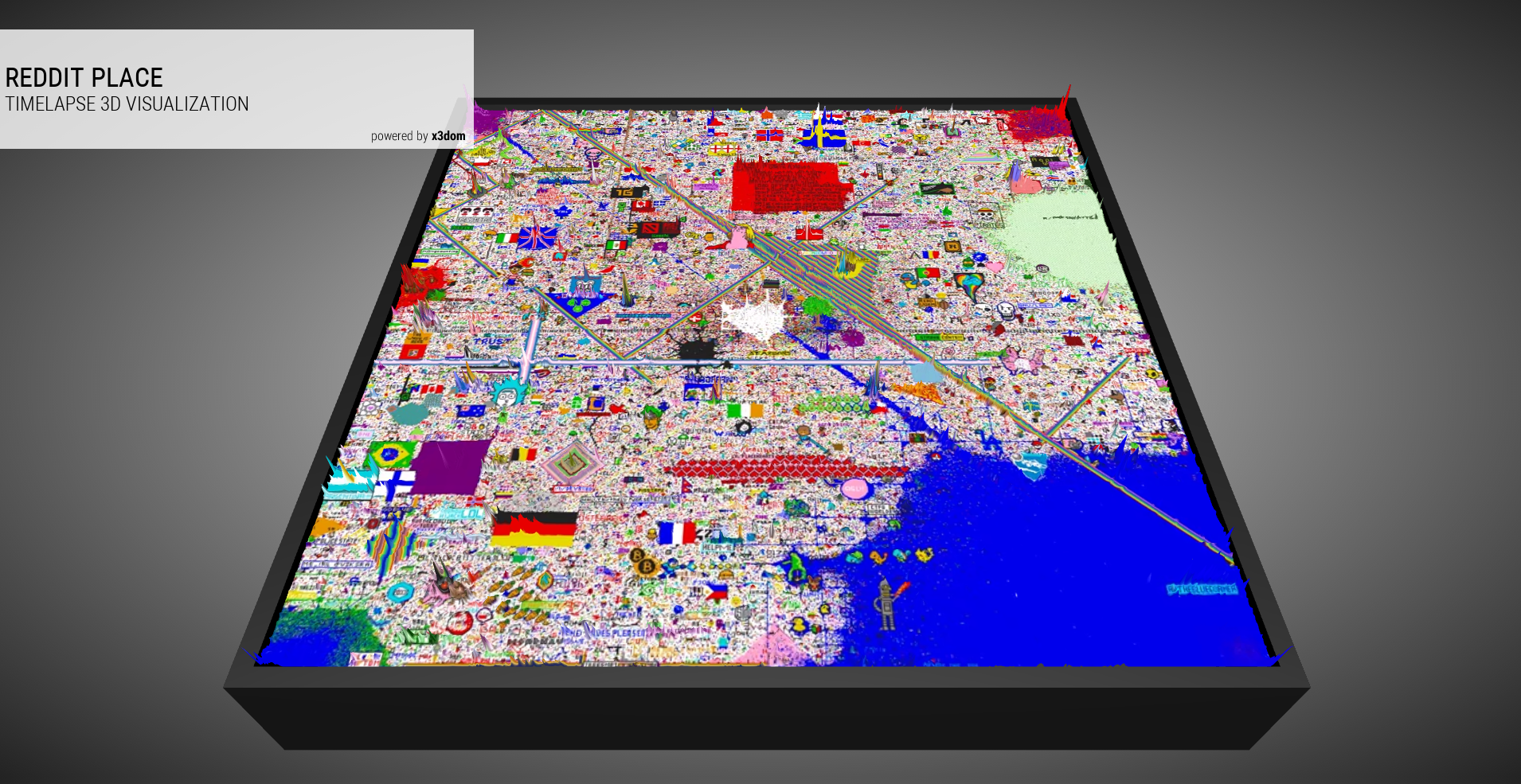
We create a simple x3dom-based timelapse 3D visualization of Reddit’s Place experiment.
See it here!
25.08.2016 Showcase
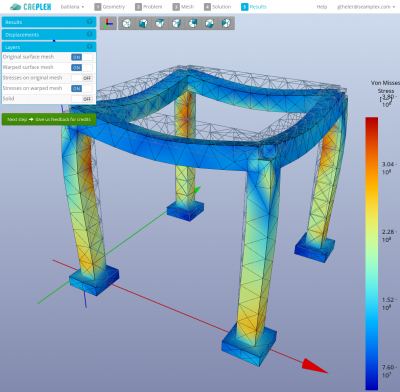
CAEplex is providing a web-based interface for finite-element analysis on the cloud. Like many other successful companies, the solution uses X3DOM for efficient 3D visualization – right inside your browser!
13.11.2015 Showcase Technical
Due to recent work by contributors from Toshiba Corporation, X3DOM now has a mode that supports joined visualization of volumetric and polygonal data.
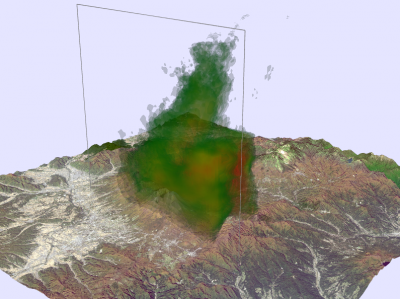
With the RadarVolumeStyle node, this exciting combination is already possible, correctly combining depth values from polygonal rendering with the current depth during volume raycasting. In the future, this feature will likely become available in all volume style nodes (see discussion).
Thanks a lot to our contributors from Japan 🙂
Check out the demo here!
Edit: In the first version of this demo (and this post), the image for the transfer function was not linked correctly (causing black smoke instead of a colored volume). This is now fixed.
12.10.2015 Showcase
The x3dom component editor is a project hosted on GitHub, providing a simple 3D editor made with HTML, JavaScript and X3DOM.
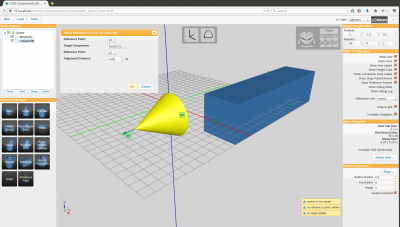
Now, the current state can also be tried out as a live demo on the X3DOM examples portal – check it out here!
10.07.2015 Code Showcase Technical
There is now a new project hosted on GitHub: A simple CAD viewer, based on X3DOM. In fact, this example application has already been around for quite some time as part of the X3DOM examples.
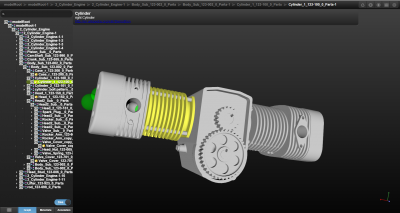
This application could serve as a basis for your own CAD projects. So, if you like to try it out, and if you maybe even want to help to improve the application, check out the GitHub project here!
01.07.2015 Code Showcase
As announced during the Web3D conference, the X3DOM team is happy to announce the launch of an open-source component editor project, which is now being hosted on GitHub. The component editor is based on X3DOM, and it shows how to create a simple Web-based editor with X3DOM and jQuery.
Current Features include:
If you are interested, feel free to check it out, or even to contribute to this project!
22.06.2015 Showcase
Researchers at the Advanced Community Information Systems (ACIS) Group at RWTH Aachen University use X3DOM to realize a collaborative 3D viewer for teaching anatomy.
Aim of the project is the creation, deployment and utilization of a pool of digital 3D anatomic models for accessing them anywhere and anytime over the Web using a standard Web browser.
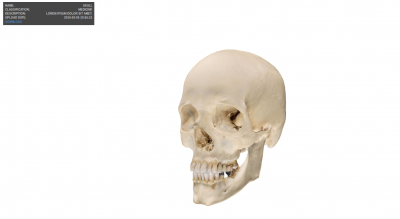
You can give it a try by checking out the prototype!
11.06.2015 Showcase
With the VolumeRC page, X3DOM developers at vicomtech have created a gallery of volume renderings, using the X3DOM volume rendering component.
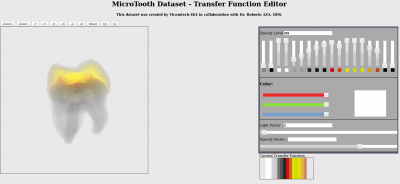
Check out the demos, which include switching between different volume rendering styles and interactive editing of transfer functions.
08.06.2015 Showcase
3D-ICONS is another noteable example of a cultural heritage project that uses X3DOM technology.
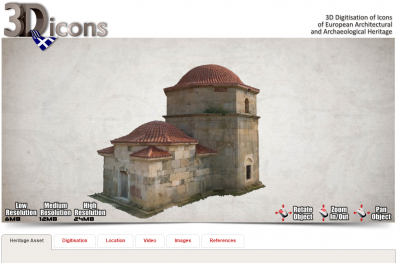
The models have not been converted to X3DOM’s optimized binary geometry format yet, so the transmission currently takes some time.
However, after loading you will get rewarded with really beautiful detailed views of architectural cultural heritage objects!
15.04.2015 Showcase
To realize their CREALIS® 3D product configuration tool, ORISA Software GmbH uses X3DOM.
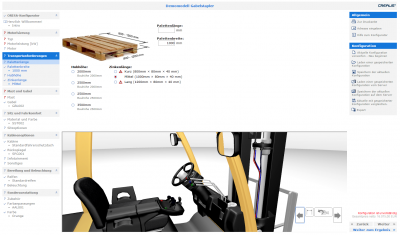
Check out a demonstration video here!
Product Configurator CREALIS® is the well-proven configuration system for manufacturers of variants in mechanical engineering, plant construction, and automobile industry as well as in automation and ancillary industries. CREALIS® has a clear and user-friendly interface and serves as an optimal and efficent sales and marketing instrument in the sales department. CREALIS® 3D supports the illustration of the product to be configured in realtime 3D within the web browser. The software tool can visualize large models three-dimensionally in all web browsers on computer or mobile devices and no additional plug-ins are required. The visualization shows the current configuration status at any time and supports the sales of products requiring extensive consulting.
23.03.2015 Showcase Uncategorized
think project!, the provider of the project platform by the same name and expert for cross-enterprise collaboration, has developed a solution for the quick utilization of digital building data. In terms of visualization, think project! is now supported by Fraunhofer IGD. To allow for high-performance visualization of BIM data, while still providing fine-granular user interaction, X3DOM is the framework of choice.
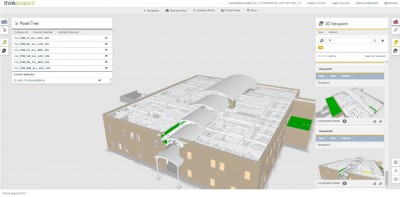
Check the official press announcement here!
13.03.2015 Showcase Uncategorized
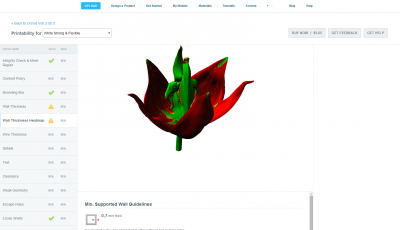
shapeways printability center
26.02.2015 Showcase Uncategorized
The 3D Scene Search Engine (3DSSE) by the Multimedia Research Group of Athena Research Center uses X3DOM for visualizing captured Scenes. 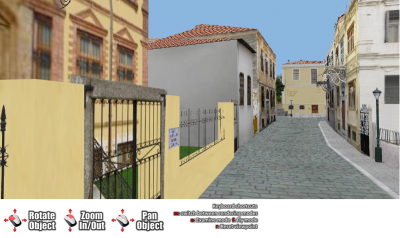
Dive into it by searching the database – an empty query will show all available content – and navigate through the scenes here. (You can, for example, use X3DOM’s fly mode by pressing ‘f’)
13.02.2015 Showcase Uncategorized
Just another example of what people do with X3DOM:
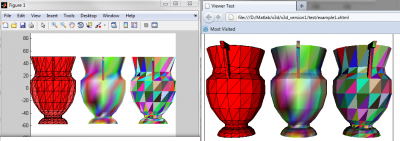
Available through Mathworks’ MATLAB Central, the function FIGURE2XHTML exports your 3D Matlab figure to an X3DOM scene, which can directly be viewed inside your browser!
12.01.2015 Showcase
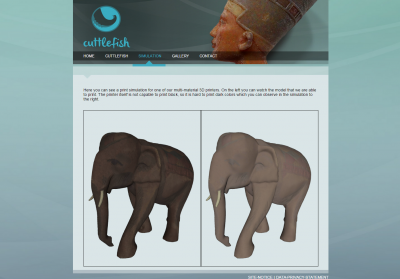
3D printing can be an expensive process, and simulation models exist to predict how a printed object would look like. To visualize such simulated objects, the cuttlefish 3D printing project uses X3DOM.
Check it out here!
19.11.2014 Showcase
Getting CAD models visualized on the Web usually requires some work, as CAD representations, such as BReps, differ from visualization formats, such as X3DOM’s BinaryGeometry or the X3D IndexedFaceSet.
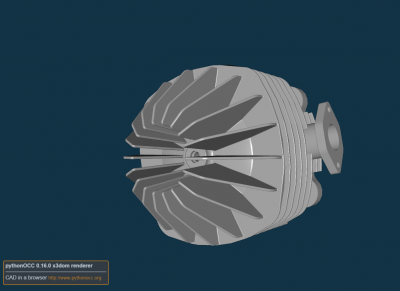
To solve problems like this, you can use PythonOCC, a python package that comes with powerful CAD functionality. This includes, for instance, exporting STEP to X3D with just a few lines of code.
For a quick look, check out some simple examples here!
20.06.2014 Showcase
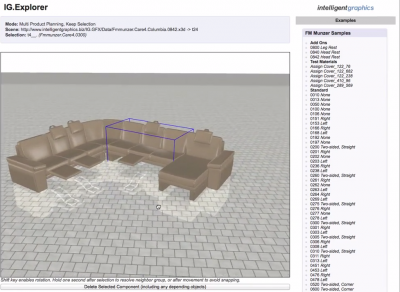
Together with researchers from HS Fulda, intelligentgraphics has recently developed a neat online furniture configuration tool.
The smart interactive 3D Product visualization is using X3DOM, and it is running with common desktop PCs as well as with touch devices. See an example video here.
22.04.2014 Showcase
The guys at treebuild.com created this little application, which allows you to paint and share your own 3D Easter Eggs or print them directly with Shapeways.
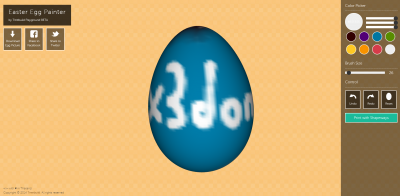
Give it a try at: http://playground.treebuild.com/easter-egg/
24.03.2014 Showcase
The American National Institute of Standards and Technology (NIST) has just made public an X3DOM version of the Digital Library of Mathemetical Functions (DLMF). VRML content has been successfully migrated to X3DOM, so that every WebGL-capable browser can now be used to inspect high-quality visualizations of mathematical functions from the DLMF.
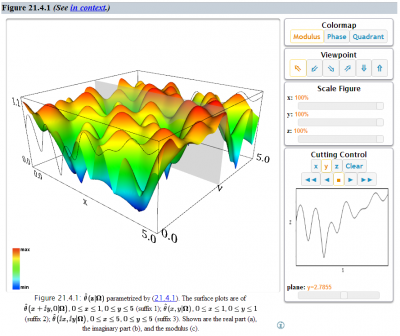
Here are some starting points to get an impression:
06.03.2014 Showcase
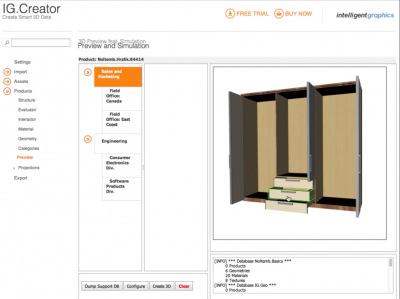
Another interesting external Showcase, which combines parametric modelling with dynamic asset management. The IG.Creator from Intelligentgraphics allows creating complex catalog applications with a data-driven design.